

Commentary
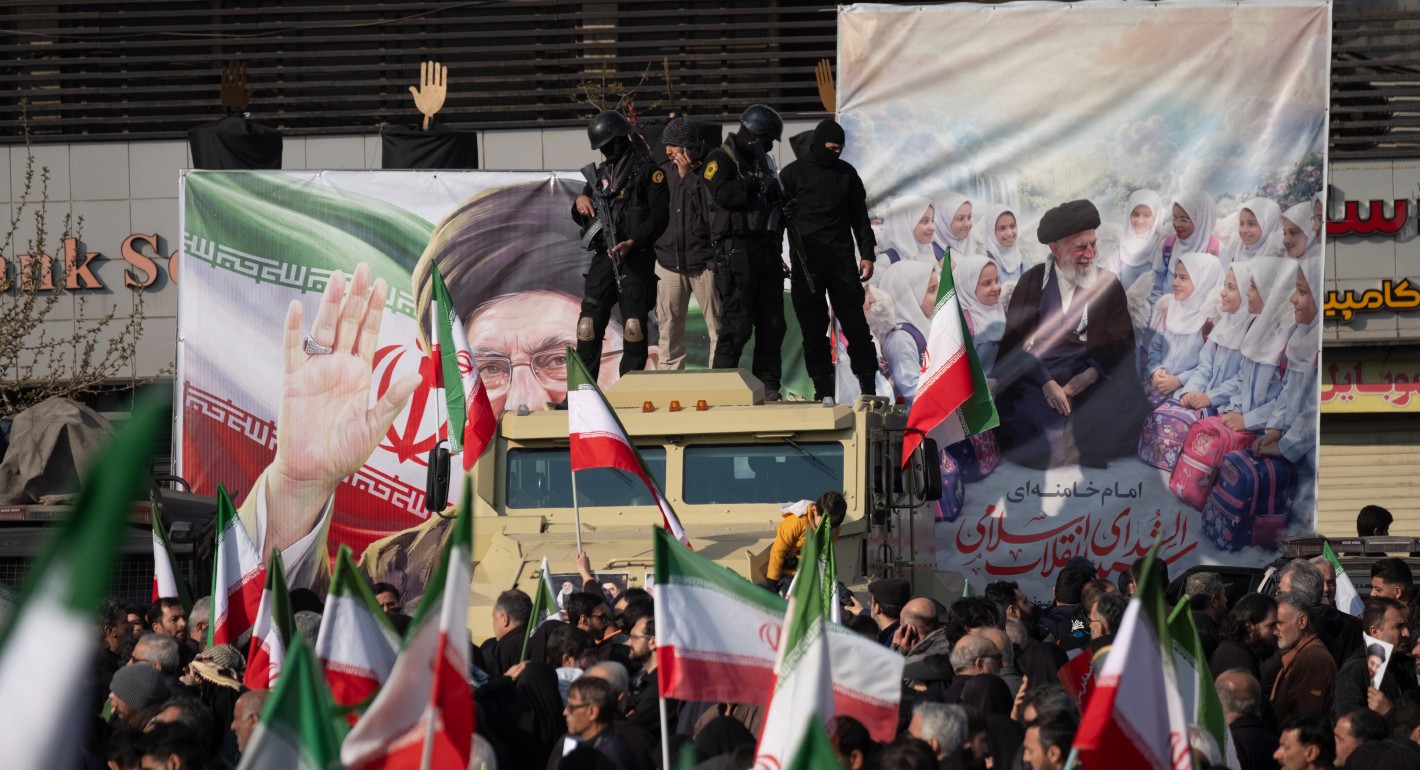
The recent record of citizen uprisings in autocracies spells caution for the hope that a new wave of Iranian protests may break the regime’s hold on power.
Thomas Carothers, McKenzie Carrier
{
  "authors": [
    "Saskia Brechenmacher",
    "Shreya Joshi"
  ],
  "type": "commentary",
  "blog": "Emissary",
  "centerAffiliationAll": "dc",
  "centers": [
    "Carnegie Endowment for International Peace"
  ],
  "englishNewsletterAll": "democracy",
  "nonEnglishNewsletterAll": "",
  "programAffiliation": "DCG",
  "programs": [
    "Democracy, Conflict, and Governance"
  ],
  "regions": [
    "United States"
  ],
  "topics": [
    "Civil Society",
    "Democracy"
  ]
}
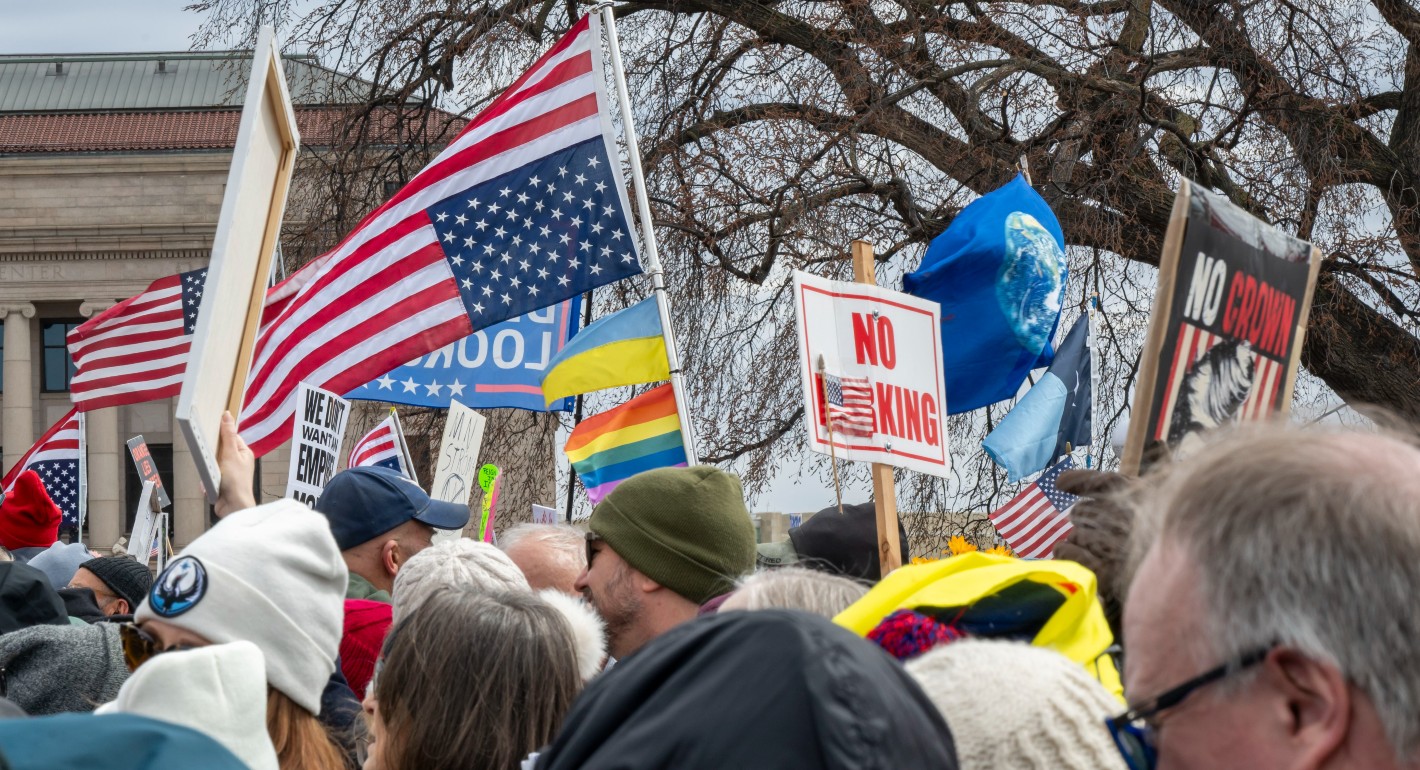
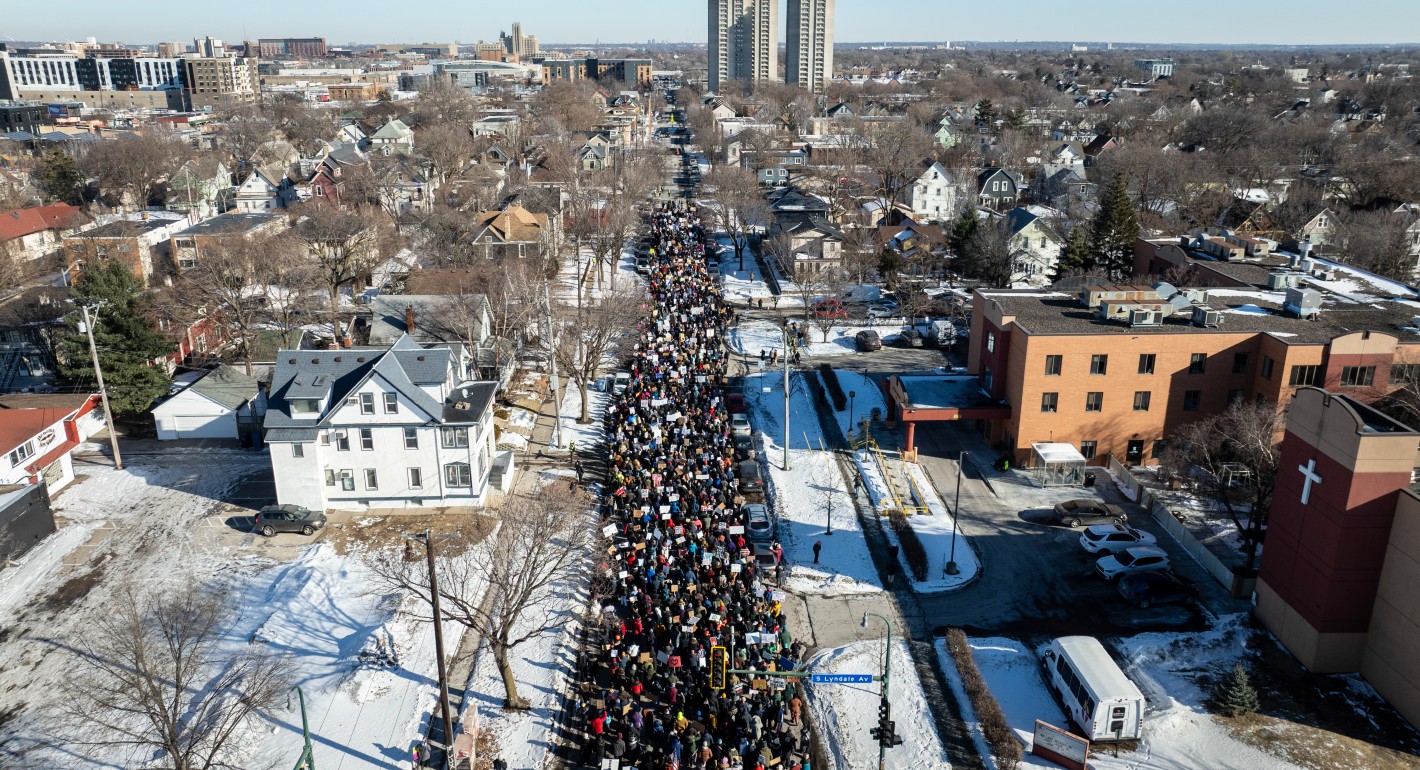
St. Paul, Minnesota, No Kings rally. (Photo by: Michael Siluk/UCG/Universal Images Group via Getty Images)
Lessons from other backsliding democracies show that mass mobilization needs to feed into an electoral strategy.
On March 28, an estimated 8 million people participated in 3,300 “No Kings” rallies across the United States, and in fifteen countries globally. Since the inaugural protest held in June 2025, millions have mobilized under the No Kings banner to voice their opposition to U.S. President Donald Trump’s administration and its perceived authoritarianism and executive overreach.
Several features set this movement apart from previous mass protests in the United States. Rather than convening at a single location, the protests have been highly decentralized, with rallies taking place in cities, towns, and suburbs across the country. By hosting protests across hundreds of locations, the organizers have sought to lower barriers to participation and strengthen local civic networks, including in places where the Trump administration enjoys significant support.
The No Kings movement has also not put forward specific political or policy goals. Instead, organizers have framed the protests as a “national resistance to tyranny,” in efforts to build a broad anti-authoritarian coalition. In practice, protesters have drawn attention to a range of issues, including concerns about democracy, immigration policy, and the U.S. war with Iran.
These choices have fueled large-scale mobilization, with some reports calling the latest round of protest one of the largest in U.S. history. But they have also generated questions about strategy: Are these protests symbolic efforts, or do they have a measurable impact on U.S. democracy? And if so, how? Experiences from other backsliding democracies clarify how mass mobilization can help stem democratic erosion—and the limits of protest as a strategy.
Around the world, mass protest alone is not enough to halt democratic erosion once it gets underway. For civic mobilization to make a lasting difference, it must be converted into electoral outcomes or institutional constraints on the executive.
Take the example of Georgia. Beginning in 2023, the country saw several rounds of mass protest, with tens of thousands rallying in the streets of Tbilisi and other major cities to protest the government’s push for a restrictive new NGO law and, later, its withdrawal from the EU accession process. Rather than ceding ground, the Georgian Dream government doubled down on its illiberal path by apparently manipulating the 2024 parliamentary elections, violently dispersing demonstrators, and pushing through a wide range of measures criminalizing protest and dissent. Although civic resistance continues, it now operates in a much more repressive political climate.
In backsliding democracies, where elections and other institutions still function but are under mounting stress, protesters face distinct opportunities and challenges. On the one hand, they have more room to mobilize without fear of violence and arrest, unlike citizens in hardened autocracies like Belarus, China, and Iran. On the other hand, incumbents who are threatening democracy often retain significant political support, and citizens are divided over whether—and to what degree—democracy is under threat. Even large numbers of people on the streets do not necessarily signal a movement’s political success, particularly if mobilization follows partisan lines.
In these contexts, protests succeed when they shift the balance of power, by shrinking support for the government that is attacking democracy and growing the coalition of oppositional, prodemocracy actors. Several tools help mass protests drive this type of political change.
A message that resonates beyond the committed base. In some countries, protests have expanded opposition coalitions by shifting public attention to issues that resonate across sociopolitical divides, like corruption or basic rights.
In South Korea, for instance, then president Yoon Suk Yeol’s attempt to impose martial law in late 2024 spurred a wave of popular mobilization. The severity of his power grab triggered a broad backlash, with surveys showing that roughly seven out of ten of South Koreans supported his impeachment, including many of his conservative supporters.
In Serbia, meanwhile, student protesters over the past two years have built a nationwide resistance movement by centering the government’s corruption and impunity for bad governance. They have done so by distancing themselves from the political opposition, which has helped them build legitimacy with those distrustful of the political class. They’ve also countered the government’s polarizing tactics with a horizontal, leaderless structure that cannot easily be delegitimized, while embracing nationalist symbols that make it harder to dismiss protesters as paid stooges or foreign agents.
The No Kings movement has also sought to expand its footprint beyond urban centers. But so far, its focus on authoritarianism does not seem to mobilize Americans across partisan divides. Polling done after the June and October 2025 protests found that over 90 percent of protesters identified as left-leaning and had voted Democrat in the 2024 election. A more recent YouGov survey suggests that just under 50 percent of Americans approved or somewhat approved of the protests. Of those, roughly 60 percent identified as Democrat and 30.5 percent identified as independent. But only 9.5 percent identified as Republican.
A shift from mobilizing to organizing. The organizers behind No Kings say they want protests to get people involved in local civic networks. This strategy has worked elsewhere, especially when civic groups channeled protest energy into voter persuasion and turnout initiatives targeting both disengaged voters and pro-government constituencies. Ahead of the 2023 elections, Polish civic actors ran nationwide turnout campaigns geared toward younger voters who had driven the 2020 abortion rights protests. The feminist group Inicjatywa Wschód, for example, launched a viral campaign that encouraged young women to vote to protect their rights. The group also took its campaign on the road, organizing events in smaller towns often neglected by national political campaigns.
A similar shift is currently evident in Serbia, where student protesters have moved from mass rallies toward electoral organizing ahead of likely elections. They have set up booths across the country to engage citizens and launched a “student in every village” campaign focused on going door to door in rural areas that have traditionally favored the ruling party.
In Brazil, on the other hand, threats of a military coup escalated ahead of the 2022 elections, so civic movements shifted their focus from mass protest to building coalitions across ideological and partisan divides, aiming to protect the electoral system and the rule of law. Through behind-the-scenes negotiations and public manifestos, they brought together business leaders, professional associations, lawyers, unions, and popular movements to signal that resistance to authoritarianism extended beyond the political left.
These examples illustrate that protest can be a starting point to channel popular energy into more strategic and targeted organizing, aimed at expanding the electorate and peeling away support from the autocratizing regime.
Taking electoral politics seriously. Civic organizing efforts in Brazil, Poland, and Serbia also show that in contexts of democratic backsliding, defeating illiberal leaders at the polls is a key stepping stone toward democratic recovery. So, popular mobilization ultimately has to feed into an electoral strategy.
This is where political parties play a critical role. Protest movements have been most successful when they connect to a united political opposition that offers a believable alternative to the ruling government. In Brazil, the main opposition candidate, Luiz Inácio Lula da Silva, not only enjoyed broad popularity among working-class Brazilians but also intentionally built a big-tent coalition that brought in former political rivals and strategically appealed to the political center. In Poland, opposition parties formed an informal alliance and took steps to appeal to Polish women and youth, including by changing their position on reproductive rights. In both cases, protest movements and civil society groups did not take a partisan side, but civic and political party strategies were broadly aligned.
In Georgia, meanwhile, young people turned out to the protests in large numbers, yet opposition parties failed to capitalize on the protesters’ energy and to put forth a unified platform that represented a clear alternative to Georgian Dream. The opposition’s fragmented and weak campaign left it unable to overcome a heavily tilted electoral playing field.
Mass mobilization can fit into broader strategies that shift power away from anti-democratic governments and, in some cases, lead to their loss at the polls. But there is an important limitation. Even when mass mobilization helps put a democratic government in power, it rarely resolves the underlying divisions that allowed autocratic politicians to rise in the first place.
In fact, it can produce new forms of countermobilization. In Brazil, far-right street mobilization has persisted even after Lula’s electoral victory in 2022. Political polarization endures, with an electorate that is deeply divided in its assessments of both Lula and Bolsonaro. And in South Korea, Yoon’s impeachment and subsequent trial have become a symbolic rallying point for far-right forces, spurring new waves of mobilization.
The coalitions assembled in moments of crisis can be difficult to sustain once the immediate authoritarian threat recedes. Underlying cleavages easily reassert themselves. Moving from reactive mobilization toward rebuilding a foundation for democratic politics is often the harder, second stage of the struggle.

Senior Fellow, Democracy, Conflict, and Governance Program
Saskia Brechenmacher is a senior fellow in Carnegie’s Democracy, Conflict, and Governance Program, where her research focuses on democratic erosion, gender, and civic activism in the United States and globally. She also serves on the board of the International Center for Not-for-Profit Law.
Shreya Joshi
James C. Gaither Junior Fellow, Democracy, Conflict and Governance Program
Shreya Joshi is a James C. Gaither Junior Fellow in the Carnegie Democracy, Conflict and Governance Program.
Carnegie does not take institutional positions on public policy issues; the views represented herein are those of the author(s) and do not necessarily reflect the views of Carnegie, its staff, or its trustees.
The recent record of citizen uprisings in autocracies spells caution for the hope that a new wave of Iranian protests may break the regime’s hold on power.


Thomas Carothers, McKenzie Carrier
New data from the 2026 Indian American Attitudes Survey show that Democratic support has not fully rebounded from 2020.


Sumitra Badrinathan, Devesh Kapur, Andy Robaina, …
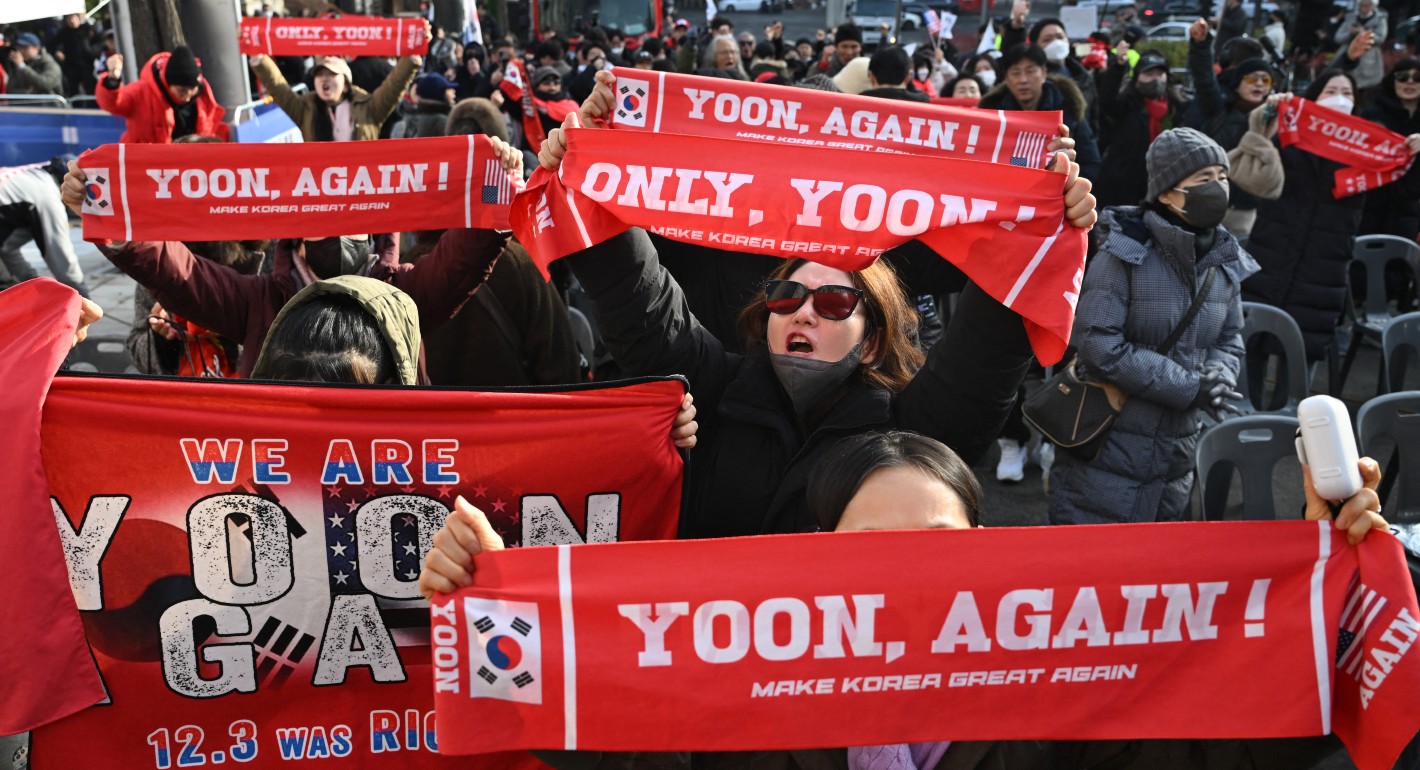
Lessons from Korea’s political right.

Darcie Draudt-Véjares
What happens next can lessen the damage or compound it.

Mariano-Florentino (Tino) Cuéllar

The uprisings showed that foreign military intervention rarely produced democratic breakthroughs.


Amr Hamzawy, Sarah Yerkes